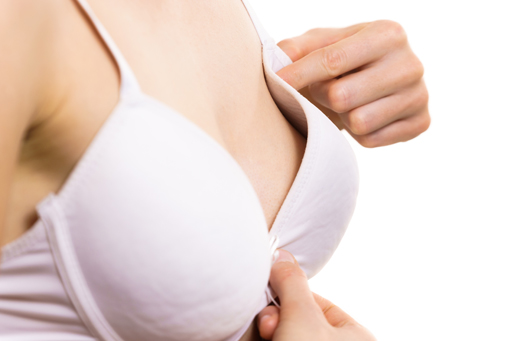
- Rapid weight loss from medications like Ozempic®, Wegovy®, Zepbound®, or Mounjaro® can shrink breast fat faster than skin and connective tissue can keep up, leading to sagging, deflation, and asymmetry.
- These changes often require the same techniques used in breast reduction and lift surgery: removing excess skin, repositioning the nipple, and reshaping the tissue envelope for a more proportional look.
- Waiting until weight is stable, ideally with a physician-supervised program like Richmond Aesthetic Weight Loss, helps ensure the best timing and results if surgical correction is needed.
If you’ve spent any time on social media or in a doctor’s waiting room lately, you’ve probably heard the term “Ozempic® face” or its lesser-known cousin, “Ozempic® breasts.” These nicknames have become shorthand for a real physiological effect: rapid, significant weight loss can change the shape, volume, and position of breast tissue, sometimes in ways patients don’t expect.
Medications like Ozempic®, Wegovy®, Zepbound®, and Mounjaro® have transformed weight management for millions of people. They work by mimicking hormones that regulate appetite and blood sugar, helping patients lose substantial amounts of body fat, often faster and more consistently than diet and exercise alone. But breasts, like the rest of the body, are made up largely of fatty tissue. When that fat disappears quickly, the results aren’t always limited to the number on the scale.
Why Weight Loss Affects the Breasts
Breast tissue is a mix of glandular tissue, connective tissue, and fat. The proportion of each varies by person, age, genetics, and hormonal history, but fat typically makes up a significant share of breast volume, especially after childbearing years. When someone loses a large amount of weight in a short period, the fat within the breast tends to shrink along with fat elsewhere in the body.
Skin Doesn’t Shrink as Fast as Fat
The problem is that skin and the connective tissue supporting the breast, sometimes called the breast ligaments, don’t shrink at the same rate as fat does. Skin has some elasticity, but it’s not infinite, and it doesn’t snap back the way it might have in your 20s. The result is breasts that lose volume but keep the stretched skin envelope that once contained a fuller breast.
Common Changes Patients Notice
- Sagging or drooping, even in breasts that weren’t previously low-hanging
- A deflated or “empty” look, especially in the upper portion of the breast
- Nipples that sit lower relative to the breast fold
- Asymmetry between the two breasts
- A shape that feels disproportionate to a newly slimmer frame
Not Everyone Is Affected the Same Way
For patients who were already carrying excess breast volume before starting a weight loss medication, this can actually simplify things. Less overall fat means less tissue to deal with. But for others, especially those who lose weight quickly or lose a large percentage of their body weight, the aesthetic outcome can be a breast shape that feels deflated, uneven, or simply not proportional to the rest of the body.
From Weight Loss to Breast Reshaping
This is where the conversation naturally shifts from weight loss to breast surgery, and it’s a shift many surgeons see play out in consultation after consultation. Excess skin doesn’t resolve on its own once the fat underneath it is gone. The nipple-areolar complex, which sits at the point of greatest projection on a fuller breast, often ends up sitting too low once that projection disappears. And the tissue envelope that once held everything in place needs to be reshaped, not just refilled or reduced, but genuinely restructured, so the breast sits higher and more proportionally on the chest.
That reshaping is precisely what a skilled breast procedure is built to do. Removing excess skin, repositioning the nipple, and tightening the remaining tissue are the same core techniques used to correct a breast that’s too large, applied here to a breast that’s simply lost its scaffolding. Some patients need only a lift, or mastopexy, to correct position and skin laxity. Others, particularly those with more redundant skin or asymmetry, benefit from combining a lift with breast reduction of the remaining tissue to create a cleaner, more balanced contour. Either way, the goal is the same one that guides any breast procedure: proportion, symmetry, and a shape that feels natural on the body it’s attached to.
Timing Matters
One thing surgeons consistently emphasize is timing. If you’re still in the process of losing weight, whether through a GLP-1 medication or another method, it’s generally best to wait until your weight has been stable for several months before considering surgical correction. Your body needs time to settle into its new composition, and operating before that happens can affect both the results and the recovery.
This is also where working with a physician-supervised weight loss program can make a real difference. Richmond Aesthetic Weight Loss, our practice’s dedicated weight loss clinic, offers medically supervised treatment that may include Ozempic®, Wegovy®, Zepbound®, or Mounjaro®, tailored to each patient’s health profile and goals. Because the program is physician-guided, patients have support in managing the pace of their weight loss and a natural pathway to discuss what happens to their body, including their breasts, once that weight comes off.
The Bigger Picture
Rapid weight loss is, for most people, a genuinely positive health outcome. Improved cardiovascular health, better blood sugar control, and reduced strain on joints all matter more than any single aesthetic concern. But it’s worth going into the process with realistic expectations about what your breasts may look like on the other side.
If you’ve lost significant weight and are unhappy with how your breasts have changed, you’re not alone, and you’re not without options. A consultation with a breast surgeon can help you understand whether a breast reduction, a lift, or a combination approach is the right next step for your body.
If you’re earlier in your weight loss journey and want a supervised, medically guided approach, our team at Richmond Aesthetic Weight Loss can talk through what options like Ozempic®, Wegovy®, Zepbound®, or Mounjaro® might look like for you, and how we support patients through the whole process, not just the number on the scale.